If you’ve ever looked into modular housing solutions or emergency shelters, chances are you’ve stumbled on x-folding container houses. As someone who’s been supplying these for the last 7 years, I get so many questions from potential clients—builders, nonprofits, small business owners, even folks who want a backyard office. One I hear way too often is: “Is this thing actually easy to finance?” And honestly, I totally get why it’s a big ask. Most people new to prefab housing don’t know how financing works for products that aren’t your standard stick-built home, and the last thing you want is to waste time on a bunch of hoops that go nowhere. X-folding Container House
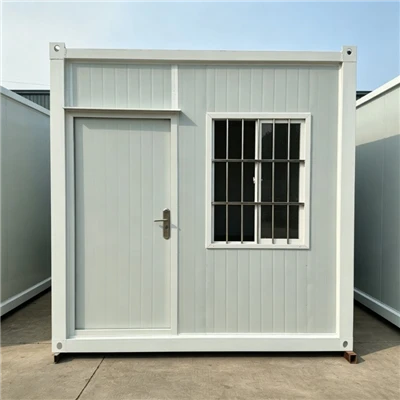
First, let’s break down what makes x-folding containers different from regular shipping containers or other prefab builds. A regular shipping container is basically a metal box—you can move it, but setting it up takes weeks, a crane, foundation work, all that. An x-folding unit? It folds flat for transport, so you can haul way more of them on a single truck, cutting delivery costs by like 40% or more. Then you unfold it on site, and most models take a couple people a day to get ready to use—no fancy crane for the install, just some basic tools. That’s a huge plus, but it also throws a lot of people off when they start talking to lenders, because a lot of financing programs are built around fixed, permanent structures.
Let’s start with the common financing routes people use for these, and be real about which are actually easy, and which are total headaches. The first one I see people try is traditional mortgage loans. A lot of folks figure, “This is a house, so get a home loan.” But most standard mortgage programs require the structure to be classified as real property—meaning it’s permanently affixed to land, like a stick-built home. X-folding containers? A lot of them are technically classified as personal property (moveable) unless you’re doing extra work to anchor it and register it as real estate. So if you go to a bank with a traditional mortgage and say you want an x-folding container home, you’ll get shut down fast, unless you already own the land and plan to tie it down full-time. That’s not to say it’s impossible, but it’s way less easy than, say, a regular home.
Then there’s chattel financing, which is basically a loan for personal property, not real estate. This is where a lot of our clients end up going, and I’d say it’s way easier than a mortgage for most people. Why? Because chattel loans don’t require the structure to be permanent, so lenders are way more familiar with these for prefab or modular items. The catch here is that chattel loans usually have shorter terms (like 5 to 15 years vs. 15 to 30 for mortgages) and higher interest rates than a home loan, but they’re way less paperwork. We’ve had small business owners buy 2 x-folding units for a pop-up retail spot, and they got approved in like 3 days with a 10-year term. Nonprofits we work with for emergency shelter? They use chattel all the time, because they don’t have the time to mess with mortgage underwriting that takes 2 weeks.
Then there’s equipment financing, which is a subset of chattel financing, but often used for things like portable offices or temporary structures. Wait, but x-folding containers can be permanent too—so if someone wants to set one up as a full-time home, and it’s anchored to a foundation (not just set on blocks), some lenders will treat it like equipment for financing. We’ve also seen people use personal loans, especially for smaller units like a backyard studio or tiny home under 500 sq ft. Personal loans are super easy to apply for, but interest rates can be high if you have average credit, so that’s a tradeoff.
Now, let’s talk about the myths that make people think financing is harder than it actually is. A lot of folks assume because it’s not a regular “house,” no one will touch it. But the modular prefab market is blowing up right now—post-pandemic, people are tired of sky-high stick-built home costs, and businesses are looking for flexible, low-cost space. Lenders have caught up, especially for x-folding containers because they’re proven: these units are used for disaster relief all over the world, for construction site offices, for affordable housing projects. So they’re not a weird, untested product—they’re a well-used solution, which makes lenders way more comfortable.
Another myth: you need perfect credit. Yeah, if you want the lowest interest rates, great credit (700+) is going to get you better terms. But we’ve had clients with credit in the mid-600s get approved for chattel loans, and even some with low 600s if they can put down a 20% down payment. That’s not to say it’s easy if your credit is bad, but it’s way more flexible than a mortgage, which usually requires 620+ just to even apply. We also work with a few specialty lenders that focus exclusively on prefab and modular structures—those guys know exactly what x-folding containers are, so they don’t ask a million weird questions about how it’s different from a regular home.
Wait, but let’s be real about the hoops that do exist, because it’s not all smooth sailing. The biggest one is documentation. For any financing, you’ll need proof that the unit is actually an x-folding container home, not a random storage container. Our company gives all clients a detailed spec sheet, a certificate of origin, and sometimes a “certificate of habitable use” if it’s designed for full-time living—stuff you can’t get from just buying a cheap shipping container off Craigslist. Lenders want to make sure the structure is actually livable (or usable for whatever you’re using it for) and not just a metal box. Also, if you’re buying land separately to put it on, some lenders will require a lot survey to make sure the unit fits, and proof you own the land. That’s extra work, but it’s standard for any property purchase, right?
Another thing that makes financing easier: the flexibility of x-folding containers themselves. A lot of our clients don’t use these as their forever home—they use them for seasonal space, pop-up shops, rental properties, emergency shelter. And a lot of financing programs love that because it’s an asset you can resell, or use as collateral. For example, if you’re a small hotel and you want 5 x-folding units for extra rooms, the lender can see that each unit has a resale value of around $15k to $25k, so the collateral is solid. That’s way different than a custom stick-built home, which is way harder to value if you ever need to sell it.
Let me throw in a quick real example to make this concrete. Last year, a construction company reached out to us. They needed 4 x-folding units for temporary offices at a new job site. They had average credit (645), and they were able to get equipment financing for 80% of the total cost, with a 7-year term, no down payment. The whole approval process took 4 days, and we didn’t have to do any extra legwork for them—we just provided the standard docs, and their lender already had experience financing modular job site units. Compare that to when the same company tried to get a loan for a stick-built office building 2 years ago; it took 3 weeks, required a 25% down payment, and they got a higher interest rate because the building was “permanent.”
Now, what about the cases where financing is not easy? It’s usually when someone is trying to use the unit as collateral for a big loan (like a business loan) without having a clear use for it, or if they’re trying to classify it as both personal and real property at the same time. Or if you’re buying a super cheap, no-brand x-folding unit from some random overseas seller that doesn’t provide any documentation. Lenders won’t touch that, because they can’t verify the value or safety of the unit. That’s why it’s important to buy from a reputable supplier like us—we make all the paperwork easy, so your financing process doesn’t get held up.
Wait, let’s also talk about down payments. For chattel or equipment loans, a lot of lenders require 10% to 20% down, but some will do 0% if you have good credit or a solid business plan. That’s way better than a mortgage, which usually requires 5% to 20% down, and sometimes more if you’re buying land. For personal loans, down payments are rare, but interest rates are usually higher.
So putting this all together: Is an x-folding container house easy to finance? It depends, but compared to a standard home, it’s way easier for most people, especially if you’re using it for a non-forever purpose (temporary housing, business space, emergency shelter) or plan to anchor it to land as a permanent home. The key is to go into it knowing which financing route fits your needs, and to work with a supplier that gives you all the documentation lenders need.

Now, if you’re thinking about moving forward—whether you’re a small business owner needing extra space, a nonprofit looking for shelter units, or someone who wants a low-cost home or backyard studio—don’t waste time guessing. Reach out to us to chat through your specific needs, and we’ll hook you up with info on the best financing options that work for you. We can share our spec sheets, walk you through what lenders usually ask for, and help you avoid any of the weird hoops that slow people down.
30ft Expandable Container House Reference 1: International Code Council. (2022). Modular and Prefab Housing: Code Compliance and Financing Considerations.
Reference 2: National Association of Home Builders. (2023). 2023 Market Trends for Modular and Mobile Structures.
Reference 3: Small Business Administration. (2022). Equipment and Chattel Financing for Small Business Assets.
Tangshan Jingrong Trading Co., Limited
With abundant experience, we are one of the most professional x-folding container house manufacturers and suppliers in China. Please feel free to wholesale customized x-folding container house made in China here from our factory. For price consultation, contact us.
Address: Room 1103, Tangshan Rongtong Building, Lubei District, Tangshan City, Hebei Province.
E-mail: Linda@tscontainerhouse.com
WebSite: https://www.tscontainerhouse.com/
