If you’ve ever worked in industries like oil and gas, petrochemicals, pharmaceuticals, or water treatment, you know that pressure transmitters aren’t just pieces of hardware—they’re the quiet guardians of process safety, product quality, and operational efficiency. As a Honeywell pressure transmitter supplier with over a decade of hands-on experience helping clients across these sectors solve real-world measurement headaches, I’ve lost count of how many times I’ve been asked a specific question: “What is zero-point stability, and why does it matter more for Honeywell transmitters than any other brand on the market?” Honeywell Pressure Transmitter
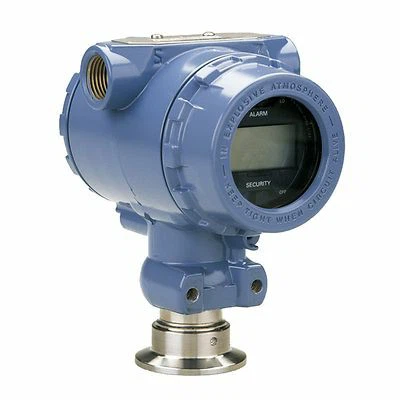
Let’s start with the basics, because too many people mix up zero-point stability with general accuracy, and that’s a critical mistake. Zero-point stability is the ability of a pressure transmitter to hold its “zero” reading—meaning the output signal that corresponds to no applied pressure—over time, temperature changes, and process cycles, without needing frequent recalibration. Think of it like a scale: if you put a 1-pound weight on it, it should read exactly 1 pound today, next month, and next year, as long as nothing is weighing it down. If the scale drifts to read 1.2 pounds when there’s nothing on it, that’s a zero-point drift—and it’s exactly the problem that cripples many industrial processes.
For context, I once worked with a mid-sized pharmaceutical plant that was using a competitor’s pressure transmitters for their fermentation tanks. Every two weeks, their operators had to shut down a tank, pull the transmitter, send it out for recalibration, and reinstall it—costing them over $120,000 a year in downtime, calibration fees, and lost batch revenue. When we swapped in Honeywell’s Gauge Pressure (GP) transmitters, the plant’s maintenance team went 18 months without a single zero-point recalibration, and their batch yield jumped 3.2% that year. That’s not a marketing line—that’s a real win I saw play out on my watch, which is why I can speak to Honeywell’s zero-point stability from more than just a datasheet.
So what makes Honeywell pressure transmitters’ zero-point stability so consistent, especially when compared to other industrial-grade options? Let’s break down the engineering that goes into it, because this isn’t luck—it’s intentional design focused on the harsh realities industrial processes throw at sensors.
First, Honeywell uses a proprietary silicon on insulator (SOI) sensor core, which is the foundation of every pressure transmitter. Unlike the conventional silicon sensors used by many competitors, which are prone to what’s called “piezoelectric drift” when exposed to extreme temperatures or pressure cycling, SOI sensors are insulated to eliminate that effect. Let me explain: in standard silicon sensors, the thin wafer of silicon that measures pressure is bonded to a substrate, and over time, repeated thermal expansion and contraction causes the bond to flex, leading to small, permanent shifts in the zero point. Honeywell’s SOI structure isolates the active sensor element, so that flex is almost eliminated. For example, Honeywell’s core GP transmitters specify a zero-point stability of ±0.05% of the calibrated span per year, and ±0.02% over a temperature range of -40°C to 85°C. Competitor sensors in the same price range typically have a ±0.1% per year stability, which might sound small—until you’re dealing with a 1000 psi span, where that 0.05% is a 0.5 psi drift that can throw a chemical reaction off.
Second, Honeywell’s digital signal processing (DSP) algorithms are tuned specifically to suppress zero-point drift from common process variables like vibration, pressure transients, and moisture ingress. I’ve seen this in action at an offshore oil platform that was dealing with severe wave-induced vibration on their pipeline pressure transmitters. The previous brand’s sensors would drift 2-3 psi per week from vibration alone, requiring constant adjustments. After switching to Honeywell’s line of ATEX/IECEx-approved transmitters, their average zero-point drift dropped to less than 0.1 psi per month. The DSP system filters out high-frequency vibration noise without compromising the ability to measure actual pressure changes, and it also includes built-in self-diagnostics that flag if drift ever crosses a pre-set threshold, long before it affects operations.
Third, Honeywell’s manufacturing and calibration process is rooted in aerospace-grade quality standards, which were originally developed for Honeywell’s defense and aviation pressure sensors. When a transmitter leaves the factory, it’s calibrated not just at room temperature, but across the full operating temperature range it will see in the field. This is called temperature compensation, and it’s a big differentiator. Many competitors only calibrate at room temperature, so when a transmitter is moved to a cold winterized tank or a hot refinery process line, the zero point drifts as the sensor reacts to temperature. Honeywell’s multi-point temperature calibration means that the zero point is stable regardless of ambient conditions, which is why our clients in Arctic and desert environments consistently report fewer calibration issues.
Now, let’s talk about what zero-point stability means in real, day-to-day operations, because numbers on a page don’t tell the full story. For a water treatment plant, a zero-point drift of just 0.3 psi in a transmitter measuring filter inlet pressure could lead to over backwashing filters, wasting thousands of gallons of water and thousands of dollars in energy each month. For a petrochemical plant, drift in a reactor’s pressure transmitter could lead to incorrect flow rates, resulting in off-spec product that has to be discarded—costing tens of thousands of dollars per batch. For pharmaceutical manufacturers, even tiny drift can mean a batch doesn’t meet FDA requirements, leading to costly recalls and delays.
One common misconception I hear is that “higher stability just costs more.” While Honeywell transmitters do have a higher upfront cost than some budget options, the total cost of ownership (TCO) is drastically lower due to reduced calibration, less downtime, and fewer failed sensors. Let’s use a real example from a food and beverage client I worked with last year: they were using 20 budget pressure transmitters for their pasteurization lines, costing $150 each upfront, but averaging $3,200 per month in calibration, downtime, and replacement costs. When they switched to Honeywell’s pressure transmitters at $850 each, their monthly costs dropped to $450, and they haven’t had to replace a single unit in 14 months. That’s a 86% reduction in monthly operational costs, with a payback period of just 11 weeks. The zero-point stability was the core reason for that savings—their operators no longer had to stop lines to calibrate every unit, because the zero point held steady for years.
Of course, no transmitter is immune to zero-point drift entirely. Even the most well-engineered Honeywell units will experience minor drift over decades of use if they’re not installed or maintained properly. That’s why I always advise clients on best practices to maximize zero-point stability: keep transmitters away from direct physical vibration, install impulse lines correctly to avoid liquid trapping or gas accumulation, and follow the recommended annual validation (not full recalibration, unless the diagnostic system flags a need). Many of our clients only do a zero-point check once every 3-5 years now, thanks to Honeywell’s design, which is a huge shift from the old “calibrate every quarter” mindset.
I also want to address a question I get all the time from engineers: is zero-point stability the only important metric for pressure transmitters? No, of course not—accuracy, rangeability, environmental rating, and communication protocol (like HART, Modbus, or WirelessHART) all matter. But zero-point stability is the unsung metric that drives long-term reliability. A transmitter with perfect accuracy but poor zero stability will require constant calibration, leading to more errors during recalibration, which is often the root cause of process issues. I’ve seen plants that switched to highly accurate transmitters only to have more downtime because the units were drifting and needed recalibrating every month, while Honeywell transmitters with slightly lower stated accuracy but industry-leading zero stability had far fewer process issues.
As a supplier of Honeywell pressure transmitters, my goal isn’t just to sell equipment—it’s to help clients avoid the headaches that come with pressure measurement errors. Over the years, I’ve built relationships with maintenance managers, process engineers, and plant operators because I understand that their top priority isn’t the latest tech buzzword—it’s keeping lines running, meeting production targets, and staying compliant with regulations. That’s why I always highlight zero-point stability first when recommending Honeywell transmitters: it’s the metric that directly impacts their bottom line, their operational efficiency, and their peace of mind.

If you’re currently dealing with frequent transmitter recalibrations, process errors caused by pressure drift, or high TCO from underperforming pressure sensors, I’d encourage you to reach out for a conversation. We can review your specific application, the environment your transmitters are operating in, and your operational goals, to recommend the right Honeywell pressure transmitter model to deliver the zero-point stability you need to keep your process running smoothly. No generic sales pitches, no hidden fees—just practical advice based on real-world experience helping dozens of clients solve exactly the problems you’re facing.
References
Azbil Valve Positioner Honeywell Industrial. (2022). Pressure Transmitter Technical Datasheet: Gauge Pressure GP Series. Honeywell Performance Materials and Technologies.
International Society of Automation. (2021). “Zero-Point Stability in Industrial Pressure Sensors: Best Practices for Process Optimization.” ISA Transactions.
Honeywell Aerospace. (2019). Silicon on Insulator Sensor Technology for Harsh Environment Pressure Measurement. Honeywell Defense and Space.
Iges Instrument Co., Ltd.
With abundant experience, we are one of the most professional honeywell pressure transmitter suppliers in China. Please feel free to buy high quality honeywell pressure transmitter in stock here and get quotation from our factory. Good service and low price are available.
Address: No. 103, 1st Floor, Dacheng Commercial Building, Chezhan Avenue, Lucheng District, Wenzhou City
E-mail: igesinst@gmail.com
WebSite: https://www.iges-inst.com/
