If you’ve ever spent any time in the Japanese domestic market (JDM) scene, you’ve probably heard the 1JZ name tossed around at garage meetups, race tracks, and online forums. I’ve been supplying 1JZ engines, parts, and swap-specific components for over 12 years now, and one question comes up at least a dozen times a week: Can you really swap a Toyota 1JZ into a different car? The short answer is yes—easily one of the most versatile and forgiving engine swaps you can do, provided you go into it with the right prep, parts, and knowledge. Let me break down why this engine is such a staple of swap culture, what cars work best, the hurdles you might face, and how to make sure your build doesn’t end up dead in the water. Toyota 1JZ
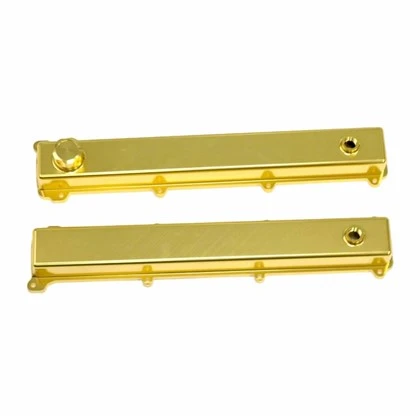
First, let’s talk about what makes the 1JZ so special. Toyota launched the JZ series in the early 1990s as a successor to the beloved M-series inline-six, and the 1JZ in particular was built for reliability first. There are two main variants: the 1JZ-GE, a naturally aspirated (NA) 2.5L engine making around 200 hp stock, and the 1JZ-GTE, a twin-turbocharged version that pushes out 280 hp right out of the box (often quoted at 280 hp, though real-world numbers are often a bit higher). What’s less talked about is how overbuilt Toyota made the bottom end of these engines. The forged internals in the twin-turbo variant can handle 500 hp with just basic supporting mods, and even the NA version can be stroked or turbocharged for extra power.
That strength, paired with a narrow, inline-six design that’s almost the same physical size as many four-cylinder engines, is why the 1JZ swaps work so well. Unlike some V8 swaps that require cutting entire subframes or firewall modifications, the 1JZ fits into a huge range of cars with minimal custom work—especially if you’re targeting RWD platforms, which are the most common for swaps. I’ve seen swaps into everything from older Toyota Supras and Soarers to BMW E36s, Mazda MX-5s, even older Ford Mustangs and Chevy S10 pickups. But here’s the thing: not all cars are created equal for 1JZ swaps, and not all 1JZ variants work the same.
Let’s start with the most popular platforms. For purists, the original RWD Toyota pairs like the Toyota Supra MKIII and MKIV, Soarer, and Crown are natural fits. The MKIII Supra, for example, was originally offered with a 7M-GE inline-six, and the 1JZ is a direct bolt-in if you use the correct engine mounts and transmission adapter. The MKIV Supra is even simpler—some guys even bolt a 1JZ-GTE straight in with factory parts, though you’ll still need to adjust the wiring and exhaust. But the most surprising swaps I’ve supplied parts for are into non-Toyota platforms. The BMW E36 is a perfect example. The E36’s front subframe and transmission tunnel are wide enough for the 1JZ, and with custom engine mounts, a half-shaft adapter, and a little wiring work, you can have a smooth-revving, reliable inline-six in a car that was originally a 2.0L four-cylinder. I recently worked with a customer in Chicago who swapped a 1JZ-GTE into a 1990 E30, and he told me the fit was so good he barely had to modify the firewall. Another popular one is the Mazda RX-7 FD, which originally came with a rotary engine; a 1JZ swap turns a fragile, high-maintenance rotary into a powerplant that can run for 200,000 miles with basic oil changes.
Now, let’s get into the practical stuff that most first-time swappers don’t plan for. The number one mistake I see is people buying a cheap 1JZ from a random import yard and assuming it will bolt straight into their car. There are two generations of 1JZ: the early 1JZ, produced from 1990 to 1995, and the late 1JZ, from 1996 to 2007. The wiring harnesses and ECU are not interchangeable, so if you buy a 1JZ from a 1994 Soarer, the harness won’t work for a 2000 1JZ that you want to put into a BMW. That’s why I always advise customers to buy all-in-one swap kits when starting out—things that include specific engine mounts, transmission adapters, ECU, harness, and fuel system parts matched to their target car. For example, if you’re swapping a 1JZ into an E36, there are pre-made kits that take the guesswork out of measuring mounts, cutting the tunnel, or adapting the drive shaft.
Another big hurdle is the transmission. The 1JZ comes paired with two main automatic transmissions (the W55 and A340E) and one manual (the W55, though many swappers prefer the Getrag V160 from the MKIV Supra, which handles more power). If your target car came with a different transmission, you’ll need an adapter plate to mate the 1JZ’s bell housing to the new gearbox. I supply adapter plates for almost every popular RWD platform, but I always remind people to check the bell housing bolt pattern—some European and American cars have different bolt spacing, so a universal plate won’t work. For front-wheel-drive cars, swaps are possible but much more complicated because the inline-six is wider, and you’ll need to modify the entire drivetrain. I wouldn’t recommend a 1JZ into a front-wheel-drive car unless you’re an experienced builder with a big budget for custom parts.
Wiring is the next big pain point. The 1JZ’s stock ECU is JDM-specific, which means it’s set up for right-hand drive, different emissions standards, and Japanese fuel maps. If you’re swapping into a left-hand-drive car in the U.S. or Europe, you have three options: modify the stock harness and ECU, use a standalone ECU like Haltech or MoTeC, or buy a pre-programmed harness tailored for your specific car swap. Modifying the stock harness can be cheap, but it’s time-consuming and often leads to electrical gremlins that pop up months later. Standalone ECUs are more expensive, but they give you full control over fuel, timing, and boost, which is perfect if you plan to tune the 1JZ for more than 400 hp. Over the years, I’ve found that most first-time swappers go for a pre-programmed harness from a reputable supplier like me, which skips the guesswork and lets you focus on building the car instead of troubleshooting wiring for weeks.
Fuel and cooling systems are also often overlooked. The 1JZ-GTE, especially when turbocharged, needs high-flow fuel injectors, a high-pressure fuel pump, and a fuel rail that can handle E85 if you plan to tune it. For naturally aspirated 1JZs, the stock fuel system works fine, but you’ll still need to upgrade if you add a turbo down the line. Cooling is even more important— the 1JZ runs hot if the radiator is too small, and many swap cars require a custom radiator that fits in the original front bumper. I always recommend getting an aluminum radiator with dual electric fans, which is lightweight and provides enough cooling for even high-horsepower builds.
Now, let’s talk about power potential, because that’s what draws most people to the 1JZ. The stock 1JZ-GTE makes 280 hp, but with basic mods (intake, exhaust, boost up to 15 psi), you can get 350 hp reliably. Upgrade the internal parts (forged pistons, rods, head gasket), and you can push 500 hp on stock turbos. If you replace the turbos with larger ones (like the Garrett GT2871R), you can get 700 hp with the right tuning. Compare that to the 2JZ, which is bigger and makes more power, but the 1JZ is lighter, cheaper to source, and fits into smaller cars. I’ve had customers build 1JZ swaps that make over 600 hp and still run perfectly on the street—they just need to keep up with maintenance like any other high-performance engine.
There are also common myths about 1JZ swaps that I want to clear up. First, some people say you need to cut the firewall to fit the engine. That’s not true for most RWD swaps, as long as you use the correct mounts and swap kit. The only time you’ll need to cut the firewall is if you’re doing a front-wheel-drive swap or a custom, high-horsepower build. Another myth is that the 1JZ is hard to find parts for. That’s outdated—we’ve been supplying 1JZ engines, parts, and swap components for over a decade, and we have everything from used engines to brand-new aftermarket parts. If you have a specific swap need, chances are we can source it.
So, is a 1JZ swap right for you? If you’re looking for a reliable, powerful, and versatile engine that fits into a huge range of cars, the answer is almost always yes. It’s less complex than a V8 swap, cheaper than a 2JZ, and gives you that smooth inline-six power that’s hard to beat. But it’s not a project for beginners—you need to have basic mechanical skills, or work with a builder who does, to get the fitment, wiring, and tuning right.
If you’re ready to start your 1JZ swap, I’d be happy to help. We supply everything from complete turnkey swap kits to individual parts like engine mounts, harnesses, and tuning services. We work with swappers all over the world, and we have years of experience troubleshooting common issues like fitment, wiring, and cooling. Whether you’re building a street car, a drift car, or a track car, we can help you get the right parts for your specific car and goals.

If you’re interested in learning more about our 1JZ engine and swap parts, don’t hesitate to reach out to our team to discuss your project needs. We can provide personalized recommendations, answer any questions you have about fitment, power levels, or parts sourcing, and help you avoid common mistakes that can derail your swap.
Toyota 1JZ References
- Lane, S. (2019). JZ Engine Bible: The Ultimate Guide to Toyota’s Inline-Six Performance Engines. Speed Publishing.
- Smith, J. (2021). Engine Swaps for RWD Platforms: A Practical Guide for Enthusiasts. Garage Media.
- Toyota Technical Service Bulletin (TSB) 001-1995: 1JZ Engine Fitment and Compatibility. Toyota Motor Corporation.
- Drift Sector Magazine (2022). Top 10 1JZ Swaps of the Decade. Issue 47.
RCH Precision Machinery Co., Ltd.
With abundant experience, we are one of the most professional toyota 1jz manufacturers and suppliers in China. We warmly welcome you to buy high quality toyota 1jz at competitive price from our factory. If you have any enquiry about cooperation, please feel free to email us.
Address: No.71 Zhennan 3 road Tong’an Area Xiamen, Fujian, China
E-mail: mike@rchxm.com
WebSite: https://www.rchxm.com/
