If you’re reading this, chances are you’re standing at that all-too-familiar crossroads: you have a part, prototype, or production run in mind, and suddenly, the phrase “CNC milling service” stops being a generic industry buzzword and becomes the make-or-break detail of your project. As a CNC milling service provider who’s spent the last 12 years helping aerospace engineers, medical device startups, automotive aftermarket brands, and even consumer goods designers turn sketches into functional, precision-machined parts, I’ve seen too many clients cut corners on this choice and end up with parts that don’t fit, cost twice as much as quoted, or miss critical deadlines. Choosing the right milling service isn’t just about picking the lowest bid—it’s about matching their capabilities to your project’s specific needs, and that’s a far more nuanced conversation than it sounds. CNC Milling Services
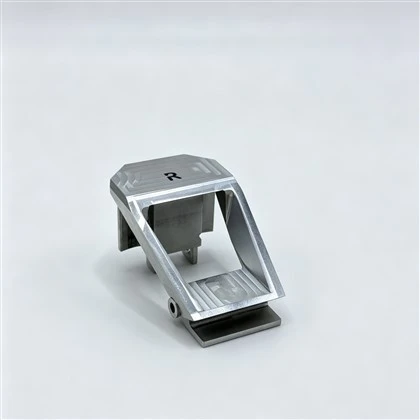
First, let’s get one thing out of the way: not all CNC milling services are built the same. You wouldn’t hire a residential carpenter to machine a titanium spinal implant, just like you wouldn’t hire a high-precision medical machinist to batch 10,000 plastic toy gears for a fast-moving product launch. The first step in vetting a service is to stop scrolling through “CNC milling near me” and start defining your own project’s non-negotiables, because that filter will eliminate 90% of mismatches before you even pick up the phone.
Let’s break that down. Start with material. This might seem obvious, but it’s a detail many first-time project owners gloss over. If your part is made of 6061 aluminum, ABS plastic, or even 304 stainless steel, a standard mid-sized service will have no problem machining it—they stock raw materials, their mills are calibrated for common alloys, and they can hit typical tolerances (usually ±0.005 inches, which is standard for most consumer or industrial parts). But if you’re working with harder, less common materials like titanium grade 5, PEEK (a high-performance polymer used in medical devices), Inconel for aerospace, or even ceramics? You need a service with specialized expertise, dedicated tooling for those materials, and a proven track record of machining them without ruining your parts or their machines. I’ve had clients come to us after a bad experience with a service that tried to mill titanium on a generic 3-axis mill without proper coolant, resulting in a $2,000 raw material block ruined and a 2-week delay. That’s avoidable.
Next, part complexity and tolerance requirements. Tolerance is the allowed deviation from a perfect measurement, and it’s where a lot of services either underdeliver or overcharge. If you’re machining a simple bracket that fits into a larger assembly where a 0.01 inch gap is acceptable, you don’t need to pay extra for a service that offers ±0.0005 inch tolerances—those are for parts like sensor components or orthopedic implants where even a hair’s breadth difference can cause failure. Conversely, if your part has intricate features: internal geometries, undercuts, 3D surfaces, or thin-walled sections that are prone to warping, you need a service with 5-axis milling capabilities. 3-axis mills are great for flat, two-dimensional parts, but 5-axis mills can machine a part from multiple angles in a single setup, reducing error, cutting time, and making complex geometries possible. A lot of smaller shops will advertise “CNC milling” but only run 3-axis machines, so ask early: what kind of mill do you use for parts with undercuts? Do you have 5-axis capacity? I’ve had startups come to us for a prototype of a drone arm with curved, tapered sections, and a smaller shop quoted them half the price, but failed to mention they’d have to outsource the 5-axis work, adding 3 weeks and $1,500 to the total cost. Always ask how they handle complex features, not just how much they charge.
Volume is another critical factor that’s often overlooked. If you need a single prototype to test fit, you don’t want to work with a service that specializes in 100,000+ part runs for automotive—their setup fees, minimum order quantities (MOQs), and lead times will be way out of line for a one-off. Conversely, if you’re gearing up for full production, a prototype-focused shop might not have the capacity, automated finishing lines, or quality control processes to handle large batches consistently. We see this all the time: a medical device startup will prototype a part with a small shop, then when they’re ready to ramp up to 5,000 units, that shop can’t commit to the volume or the ISO quality standards required for medical devices, so they have to re-qualify a new supplier, delaying their launch by 2 months. Ask: what’s your sweet spot for volume? Do you handle prototype runs (1-10 parts), short runs (11-1,000), or high-volume production (1,000+)? And what are your MOQs? That’s not a rude question—it’s a way to make sure their business model aligns with yours.
Now, let’s talk about quality and compliance, because this is non-negotiable for certain industries, and even important for others. If your part is going into aerospace, medical devices, automotive, or defense, you need a service that follows strict industry standards: ISO 9001, AS9100 for aerospace, FDA 21 CFR Part 820 for medical devices, or IATF 16949 for automotive. These standards aren’t just boxes to check—they mean the service has formal quality control processes: first-article inspections, in-process checks, material traceability, and documentation that proves every part meets your specifications. Even if your part is for a hobby project or a small consumer product, a service with robust quality control will catch small errors before they become big problems. I once had a client send us a sketch for a custom watch gear, and our quality team caught a 0.003 inch misalignment in the gear teeth that the other service he’d contacted had missed—his watch would have failed entirely once assembled. Don’t be afraid to ask for copies of their quality certifications, or to see a first-article inspection report for a similar part they’ve machined. Transparency here is a good sign.
Then there’s lead time and communication. Let’s be real: most projects have a deadline, and delays can cost you money, market share, or even partnerships. A lot of services will advertise “1-week turnaround” but that’s often for simple, standard parts, not for complex prototypes or custom materials. When you’re vetting a service, ask for a realistic lead time, and also ask how they handle changes to your project. Will they send a digital preview of the machined part before they start production? Do they have a point of contact you can reach directly, or do you have to go through a generic support line? I’ve had clients who worked with large, impersonal services and waited 3 days for a reply to a simple question about a tolerance adjustment, missing their launch window by a week. At our shop, every client gets a dedicated project manager, a 3D preview of their part before any machining starts, and we send progress photos at key stages—small things, but they make a huge difference in avoiding miscommunication. Also, watch out for services that give you a quote that’s too good to be true. If their bid is 30% lower than every other service you’ve talked to, there’s almost always a catch: they might outsource part of the work, cut corners on quality, or have hidden fees for setup, material, or shipping. We once had a client who got a $500 quote for a set of 5 aluminum brackets, only to end up paying $1,200 after the “low-cost” shop added $300 for tooling, $200 for rush lead time, and $200 for “handling” that was not disclosed upfront. Always ask for a detailed breakdown of the quote: what’s included in the price? Are there any extra fees for setup, material, finishing, or shipping? That way, you don’t get sticker shock later.
Wait, there’s one more thing: finishing and secondary operations. A lot of new project owners assume the milled part is done once it comes off the machine, but most parts need secondary operations to work as intended. That might be anodizing for corrosion resistance or color, powder coating, CNC grinding, polishing, assembly, or even packaging for shipping. Some milling services offer in-house finishing, which is a huge convenience—they can handle everything in one place, maintain quality control across all steps, and often save you time and money. Others will outsource finishing, which adds cost and lead time, but can be a good fit if they have trusted partners. Just don’t assume the service offers finishing—ask: what secondary operations do you handle in-house? What do you outsource? And can you provide references for their finishing work? A poorly applied anodize, for example, can ruin a perfectly machined part, so it’s important to make sure the service knows how to handle those steps.
Let’s wrap this up with a quick checklist you can use when you’re evaluating any CNC milling service:
- Define your project’s core needs: material, part complexity, tolerance, volume, deadline. Write these down before you reach out, so you don’t get sidetracked by services that can’t meet your requirements.
- Verify their capabilities: do they work with your material? Do they have the right mill type for your part complexity? What’s their volume sweet spot?
- Check quality and compliance: what certifications do they hold? Do they have a track record with parts similar to yours?
- Understand their quote and lead time: is the quote detailed, with no hidden fees? Is the lead time realistic, and do they offer transparent communication?
- Confirm secondary operations: do they handle necessary finishes in-house or via trusted partners, and can those meet your specifications?

At the end of the day, choosing a CNC milling service is a partnership, not just a transaction. The best service for your project is one that asks you questions, explains their processes clearly, and is willing to adapt to your needs—whether that’s a one-off prototype, a small batch, or a large production run. If you’re ready to talk through your project, share your sketch or requirements, and get a customized quote that’s transparent and tailored to your needs, don’t hesitate to reach out for a procurement discussion.
CNC Turning Services References:
- AS9100:2016, Quality Management Systems – Requirements for Aviation, Space, and Defense Organizations
- ISO 9001:2015, Quality Management Systems – Requirements
- IATF 16949:2016, Automotive Quality Management System Requirements
- DeGarmo, E. P., Black, J. T., & Kohser, R. A. (2020). Materials and Processes in Manufacturing (13th ed.). John Wiley & Sons.
- Machining Data Handbook (4th ed.). (2017). National Machine Tool Builders’ Association.
Dongguan Bosi Precision Co., Ltd.
With abundant experience, we are one of the most professional CNC milling products manufacturers and suppliers in China. We warmly welcome you to buy high quality CNC milling products made in China here from our factory. We also accept customized orders.
Address: Room 101, Building2, No. 30 Shangsheng Road, Changan, Dongguan, Guangdong
E-mail: irene@bosiprecision.com
WebSite: https://www.bosiprecision.com/
