If you’ve ever stood in our plush toy warehouse, you might’ve noticed a question we get all the time from curious parents, gift buyers, and even small boutique retailers: “Do plush toys have a specific weight limit?” As a plush toy supplier who’s worked with manufacturing teams, quality control labs, and thousands of clients over 12 years, I’ve spent countless hours digging into this question—because it’s not just about how heavy a teddy bear or a unicorn is. It’s about safety, durability, and making sure the toy holds up for every kid (or kid-at-heart) who takes it home. Plush Toys
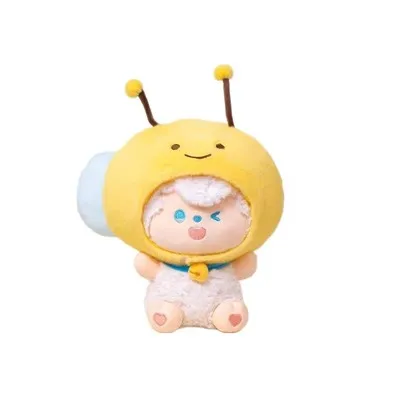
Let’s start with what most people don’t realize: plush toys aren’t just fabric and stuffing. Their weight ties directly to three key areas: structural integrity, safety for small children, and compliance with global toy safety standards. Let’s break this down.
First, structural integrity. When a plush toy is designed, engineers and pattern makers calculate how much stress its seams, stitching, and fabric can handle. Stuffing—usually polyester fiber, the most common fill—has a weight limit too. If a toy is stuffed too tightly, or made with low-quality fabric, it can’t support extra weight without tearing. I’ve seen this firsthand. Early in my career, I worked with a small factory on a line of 2-foot-tall plush dinosaurs. The team tried to add extra stuffing to make the dinosaurs feel “more substantial,” adding about 1.2 pounds to their total weight. Within the first week, 17 of the 500 toys shipped had split seams at the neck, where the head attaches to the body. The problem? The factory used a basic lock stitch for the seams, which isn’t designed to hold extra weight for large toys. We fixed it by switching to a reinforced double lock stitch, and that specific weight limit for 2-foot dinosaurs dropped from 3.5 pounds to 2.8 pounds—any heavier, and the seams failed.
That’s a key point: weight limits aren’t one-size-fits-all. They depend on the toy’s size, shape, and construction. A 6-inch mini plush keychain, for example, might only weigh 0.2 to 0.4 pounds total. Its weight limit (meaning the maximum amount of force it can handle without breaking) is super low—you don’t want a tiny keychain toy that’s heavy enough to yank keys off a bag, right? A 6-inch plush has a structural weight limit of around 0.6 pounds total. Any heavier than that, and its thin fabric can stretch, or the stitching holding the key ring pull tab can come loose. On the other end, our largest plush line, 6-foot and 7-foot oversized bears, have a total weight range of 8 to 10 pounds. Why that range? For a 6-foot bear, if we go over 10 pounds, the base of the toy (its feet) can’t stay flat on a hard surface—it tips over. Kids climb on these toys sometimes, and a tipping heavy bear can cause a small fall. That’s a safety concern, not just a durability one.
Which brings us to safety, the biggest factor in weight limits for plush toys, especially for kids under 3. The U.S. Consumer Product Safety Commission (CPSC) and the European Union’s EN 71 toy safety standard both have rules about small parts and choking hazards. Wait—how does weight tie into that? Simple: if a plush toy’s head (or a limb) is too heavy, it can detach if seams break, becoming a small choking hazard for toddlers. Let’s say we make a plush rabbit with a head that weighs 0.7 pounds. If the rabbit’s neck stitching comes undone, that 0.7-pound head might be small enough to fit through a CPSC’s standard 1.75-inch test cylinder—meaning it’s a choking hazard. The solution? For toys intended for ages 0 to 3, we cap the weight of detachable parts (like heads, arms, or ears) at 0.4 pounds. That way, even if a seam breaks, the part is too heavy to fit through the test cylinder, so it’s not a choking risk. We saw this in 2019, when a competitor shipped a line of 12-inch plush dogs for toddlers. Their head weighed 0.65 pounds—just over our 0.4-pound limit. A few reports came in from parents whose kids chewed through the neck seam, and the head became a choking risk. That line was recalled, which is a costly mistake no supplier wants to make.
Then there’s the myth that heavier plush toys are higher quality. A lot of buyers assume that a 5-pound plush is better than a 2-pound one, but that’s not true. The weight difference often comes from extra stuffing or thicker fabric, but if it’s not engineered correctly, that extra weight can make the toy dangerous or prone to breaking. I recently had a client, a toy retailer in Texas, who ordered a bulk shipment of 10-inch plush teddy bears from a supplier overseas. The bears weighed 2.2 pounds each—almost twice the weight of our standard 10-inch teddy, which weighs 1.1 pounds. They started getting complaints within a month: 12% of the bears had torn seams at the arms, and three parents reported their toddlers tugged an arm off, which was a small choking hazard (that arm weighed 0.5 pounds, just over the toddler weight limit). The retailer returned the entire shipment, and switched to our line because we test every toy’s weight to match age groups. That’s the thing: weight is a balance of quality, safety, and function, not a measure of how “good” a toy is.
So what’s the actual science behind setting a weight limit? It’s a process we go through for every new plush design, called “load testing.” We send prototype toys to a third-party lab that specializes in toy safety, and they put the toys through a series of tests: pulling on limbs to simulate a kid tugging, dropping the toy from 3 feet (standard for CPSC testing), and checking for any small parts that come loose. For each test, they measure how much weight the toy can handle before failing. Let’s take two examples:
-
Mini plush (4 to 8 inches, ages 3+): Total weight limit of 0.4 to 0.6 pounds. The lab tests these toys by pulling the arm (or key ring tab) with 5 pounds of force. If the tab pulls off at less than 5 pounds, we reinforce the stitching. The total weight is capped here because mini plush are often used as keychains, party favors, or giveaway items—too heavy, and they’re uncomfortable to carry, or can cause injury if someone trips over a heavy keychain.
-
Medium plush (12 to 24 inches, ages 3+): Total weight limit of 1.5 to 3 pounds. For these, we test the toy’s ability to hold a 10-pound load for 10 minutes (simulating a kid sitting on the toy). If it sags too much, we add more reinforced stitching or use denser fabric. We also test the head weight: max 0.5 pounds, so even if a seam breaks, it’s not a choking hazard for younger kids who might play with medium plush too.
-
Oversized plush (48 to 84 inches, ages 5+): Total weight limit of 8 to 12 pounds. Here, we test the toy’s stability by placing it on a hard surface and adding weight to the top of the head. If it tips over at less than 20 pounds, we widen the base of the toy to lower its center of gravity. We also test that the fabric can hold a 50-pound pull without tearing, since older kids might climb on these toys.
It’s also important to note that some plush toys have adjustable weight, like weighted plush (also called sensory plush) for kids with autism, anxiety, or ADHD. These are designed with a specific, therapeutic weight—usually 5% to 10% of the user’s body weight, per occupational therapy guidelines. Wait, does that mean weighted plush have a different weight limit? Absolutely. A weighted 10-inch plush for a 5-year-old (who weighs around 40 pounds) should weigh 2 to 4 pounds total. If it’s heavier than 4 pounds, it can be too restrictive, or even cause strain on a young kid’s muscles. We work closely with pediatric occupational therapists to make sure our weighted plush meet those 5-10% guidelines, and we label each toy clearly for the appropriate age/weight of the child. That’s a special case, because weighted plush have a functional weight limit tied to therapy, not just durability.
I get asked a lot if there’s a universal weight limit, and the answer is no. It all depends on the toy’s purpose, age range, and construction. For example, a plush toy meant for a toddler can’t weigh more than 1 pound, max, to prevent injury if it falls on a small child. A plush toy meant for a teen’s bedroom decor can weigh up to 5 pounds, since they’re less likely to put the toy in their mouth, and the seams can handle more weight. Even the fabric matters: if we use a heavy minky fabric instead of a lightweight cotton, the total weight of the toy goes up, so we have to adjust the seam reinforcement to match.
As a supplier, we take weight limits seriously because we know a bad toy can hurt a kid, or cost a retailer time and money. We don’t overstuff our toys to make them “look fuller” or feel heavier—we calculate every part of the toy’s weight during the design phase, test each prototype, and then test every batch before it ships. We’ve had to redesign lines before because we realized we’d miscalculated a weight limit, and while that’s a cost, it’s way better than dealing with recalls, returns, or safety issues.

If you’re a boutique retailer, parent, or event planner looking for plush toys that meet safety standards, match your needs, and don’t have avoidable weight-related issues, we can help. Whether you need mini plush keychains for a brand promotion, medium plush for a kids’ play area, or weighted sensory plush for a therapeutic program, we work with you to confirm weight limits, construction, and safety compliance. Reach out to our team to discuss your specific needs and get a quote.
Plush Toys References
- U.S. Consumer Product Safety Commission. (2022). Toy Safety Standards: Small Parts and Choking Hazards.
- European Committee for Standardization. (2021). EN 71-1: Safety of Toys – Part 1: Mechanical and Physical Properties.
- American Occupational Therapy Association. (2020). Guidelines for Weighted Sensory Toys for Pediatric Use.
- International Council of Toy Industries. (2023). Global Toy Manufacturing and Durability Testing Standards.
Foshan Qiying Toys Co., Ltd.
As one of the most professional plush toys manufacturers in China, we warmly welcome you to wholesale bulk plush toys made in China here from our factory. All toys are with high quality and competitive price. For pricelist and quotation, contact us now.
Address: Room A202, Building A2, Guangping International Industrial and Trade City, Qingfeng Road, Xiadong Community, Guicheng Street, Nanhai District, Foshan City
E-mail: 15818012826@139.com
WebSite: https://www.qiyingtoys.com/
