Hey there, quick question: if you’re rolling around in a pickup, semi, or any work truck, have you ever stared at your truck tires in a pinch and thought, “Wait, can I just yank out my portable tire inflator and fill these up right here?” I get it. I’m the head of product here for a portable tire inflator brand—yep, the people who’ve spent the last 6 years tweaking these little gadgets for everything from family sedans to construction vans—and I’ve fielded this exact question a hundred times. Most folks Google it and get a mess of half-answers, so let’s cut through the noise. Here’s the real tea on whether your everyday portable inflator works for truck tires, when it does, when it definitely doesn’t, and even a few tips I’ve picked up from guys who’ve blown up more inflators than I care to admit. Portable Tire Inflator

First off, let’s get the basics straight: truck tires aren’t car tires. I don’t mean just the size—though most truck tires are way bigger, like 22.5-inch semi tires or the beefy 16-inch all-terrain work tires on a half-ton pickup (looking at you, F-150 and Silverado guys). The big difference is air volume. A standard passenger car tire holds like 20-25 gallons of air when fully inflated. A single work truck tire? That’s 40-60 gallons. A semi tire? Try 120+ gallons per tire. Oh, and the required pressure? Car tires usually run 30-35 PSI, but truck tires—wait, that depends. Half-tons with heavy loads might need 45-55 PSI, while semi tires run 80-100 PSI. That’s a huge jump from what most regular portable inflators are built for.
Now, let’s break this down by what kind of portable inflator you actually have, because not all of these gadgets are created equal. I’ve seen everything from the $20 plug-in cigarette lighter jobbies that my uncle swears by to the heavy-duty cordless ones we make that go toe-to-toe with shop air compressors. Here’s the gist:
If you’ve got that cheap, pocket-sized inflator—you know, the one that came free with your emergency car kit at the dealership—forget it for truck tires. These little guys are designed for car tires, tops. They usually max out at 30-40 PSI and have a tiny airflow rate, like 0.5 CFM (cubic feet per minute). Trying to fill a truck tire with that? It’ll take forever, and it’ll overheat. I once tested a $15 inflator on a half-ton all-terrain tire; I let it run for 45 minutes, and it still only hit 28 PSI. The inflator itself started smoking, and I had to stop before it died. Not worth it, and definitely a fire hazard if you leave it plugged in too long.
Then there’s the next step up: the consumer-grade cordless inflator, the ones you grab at Walmart or Amazon for $50-$100. A lot of these say “works for trucks” on the box, but don’t take that at face value. Most max out at 50-60 PSI and have a CFM of 1.0-1.5. That’s enough for a light-duty half-ton pickup tire, especially if you’re not towing a 5th wheel or hauling a full bed of gravel. But if you’ve got a 3/4 or 1-ton Dodge Ram, Ford Super Duty, or GMC Sierra? Those tires need 55+ PSI, and that inflator might hit its max before you get there. I’ve had customers message me saying their $80 inflator died mid-fill on a Super Duty tire—ruined the battery, and they still had to run to a gas station.
Now, what about a proper heavy-duty portable inflator? That’s what we build here. These max out at 150 PSI (more than enough for any truck on the road, semi included) and have a CFM of 2.0 or higher. Our top model, for example, pushes 2.5 CFM—fast enough to fill a half-ton tire in 3-4 minutes, a 3/4-ton in 5-6, and even a semi tire in under 15 minutes. The motor’s built to handle the heat, too; we tested our inflator running for 20 straight minutes on a semi tire, and it didn’t even warm up enough to need a break. That’s the kind of portable inflator that actually works for truck tires.
But wait—even if you’ve got a heavy-duty one, there are rules. I’ve seen guys try to fill a semi tire with a portable inflator and still mess it up. Let’s talk about the caveats here, because skipping these will still get you stuck.
First, check your power source. Most heavy-duty portable inflators plug into your vehicle’s 12V cigarette lighter port, right? A lot of newer trucks, especially diesels, have a weaker 12V system when the engine is idling, or if you’re running other accessories (like headlights, AC, a fridge). If you try to run a high-CFM inflator on a dying battery or while the engine’s off? The inflator will draw too much power, blow a fuse, or kill your battery so bad you can’t start the truck. Pro tip: always run the engine when using a portable inflator on truck tires, and if you’re running a semi or big work truck, a lot of those have a 24V system—make sure your inflator’s compatible with that, too. We build adapters for that, because we’ve had way too many customers fry their inflators on a semi’s 24V.
Second, tire condition matters. If your truck tire has a slow leak, a puncture, or is underinflated so bad it’s flat, a portable inflator might not cut it. Wait—let me explain that. If a tire is totally flat, the sidewall is collapsed, and the air chamber is all twisted up, the inflator has to work way harder to push air in. That can make even a heavy-duty inflator overheat, or take forever to fill. Always patch or replace a punctured tire first before inflating, or at least get it to a shop to check the sidewall. I once had a customer try to fill a flat work truck tire with our inflator, and it ran for 30 minutes straight—he got 10 PSI in it, and the inflator’s motor started smelling like burnt plastic. Never again.
Third, know your tire’s PSI rating. I can’t tell you how many guys just crank the inflator until it stops, then wonder why their ride is bumpy or they’re getting bad gas mileage. Truck tire PSI isn’t a one-size-fits-all number. It’s on a sticker inside your driver’s door jamb (that’s the placard, not the tire’s sidewall—sidewall is max PSI, which is higher than what you actually need). If you’re hauling a heavy load or towing, your required PSI goes up. For example, my F-150 runs 35 PSI when it’s just me driving, but when I tow my 2,000 lb trailer, it needs 50 PSI. If I set the inflator to 50, it stops when it hits that—no overinflating. That’s why all our inflators have an auto-shutoff feature; it’s not a gimmick, it’s for truck guys who don’t want to sit there with a gauge for 10 minutes.
Now, let’s talk about when you should skip the portable inflator entirely and just head to a gas station or a shop. There’s no shame in this, I promise. If you’re on a remote job site with no power, and you need to fill a semi tire that’s 10 PSI low? A portable inflator will work. But if you’re replacing a semi tire that’s totally flat, or if you have multiple semi tires that need filling? A portable inflator might not be fast enough, or powerful enough, to get you back on the road without stopping for hours. For smaller trucks, if you’re in a pinch and only need to fill one tire, a good heavy-duty portable inflator is perfect. But if you’re at a gas station with a $1 air hose, that’s probably better for a 4-tire fill because those hoses have way higher CFM. The portable one is for emergencies, not for routine fills.
I’ve been testing these inflators for years, and I’ve heard every horror story: the inflator that died on the side of the highway in the rain, the one that burned out mid-fill on a construction site, the guy who tried to use his car inflator on a semi and ended up calling a tow truck. The biggest takeaway here is that “can I use a portable tire inflator on truck tires?” isn’t a yes or no question—it’s a depends on what inflator you have, and what you’re using it for.
If you’ve got a cheap pocket inflator? No, skip it. If you’ve got a consumer-grade one from the big box store? Maybe for light half-ton use, but don’t push it. If you’ve got a heavy-duty portable inflator built for medium to high CFM, with a 12V/24V option and auto-shutoff? Absolutely, it’ll work for 90% of the emergencies truck drivers and owners run into.
Here’s the thing that a lot of inflator brands won’t tell you: portable inflators aren’t one-size-fits-all. We didn’t design our inflators to work for cars only—we made them for the guys who drive work trucks, tow trailers, haul equipment, and get stuck in the middle of nowhere with a low tire. That’s why we tested them on everything from half-tons to 18-wheelers, built them to handle the power draw, and added features that actually matter for truck owners, not just sedans.
If you’re a truck owner who’s tired of being stuck with a flat tire on the side of the road, or if you’re a fleet manager looking for reliable inflators for your drivers, we’re here to help. We build portable inflators that hold up to truck work, no BS. If you want to chat specs, bulk pricing for fleets, or just ask more questions about which inflator works for your truck, reach out to us anytime. No sales pitch spam, no complicated hoops—just real talk from guys who use these things every day.
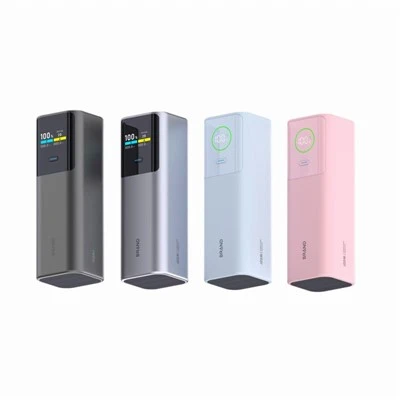
At the end of the day, truck tires need more power than car tires, but that doesn’t mean you need a huge shop compressor to get back on the road. A good portable inflator can do the job, as long as you pick the right one and use it the right way. Skip the cheap stuff, check your power source, watch your tire pressure, and you’ll never be stuck waiting for a gas station hose again.
Car Wireless Chargers References
National Highway Traffic Safety Administration. (2022). Tire Pressure Guidelines for Light-Duty Trucks and Vans. U.S. Department of Transportation.
Rubber Manufacturers Association. (2021). Tire Load and Pressure Specifications for Medium and Heavy-Duty Trucks. RMA Technical Bulletin.
Portable Inflator Industry Testing Standards. (2023). Outdoor Power Equipment Institute.
KOMOS Co., Ltd.
As one of the most professional portable tire inflator manufacturers and suppliers in China, we are committed to providing high quality custom service and OEM service. Please feel free to wholesale bulk durable portable tire inflator at competitive price from our factory. Welcome to contact us for quotation.
Address: 4th Floor, Building 3, Zhongxi Buchong Community, Shajing Street, Bao’an District, Shenzhen City, Guangdong Province, China 518104
E-mail: contact@komos-tech.com
WebSite: https://www.komos-tech.com/
