Hey there, let’s cut to the chase: if you’ve ever seen a pile of styrofoam (that’s EPS, by the way—expanded polystyrene) at a construction site, a grocery store dumpster, or even a residential curb, you’ve probably wondered, “Is this stuff ever gonna go away?” I’m Jake, and I run a small EPS recycle system business, so I get this question all the time. The short answer? It’s not a yes/no question—because when people picture EPS, they almost always imagine the crumbly, landfill-bound foam that’s been piling up since the 1950s. But when you work with EPS recycle systems day in and day out, you realize the “environmental friendliness” of the whole thing depends on two big things: how you process the EPS, and what you do with the recycled stuff after. Let me walk you through this, no corporate jargon, just real talk from someone who’s spent years troubleshooting these systems. EPS Recycle System
First, let’s get the basics out of the way: EPS isn’t just “styrofoam”—that’s a brand name, and most people don’t realize EPS is 95% air. That tiny bit of plastic is what makes it lightweight, cheap, and perfect for packaging electronics, insulation for buildings, or disposable food containers… but it’s also the part that’s a problem when it’s discarded. Landfill EPS doesn’t biodegrade—photodegrades, maybe, over 500+ years, but that just means it breaks into microplastics that leach into soil and water. And incinerating it? That releases toxic fumes like benzene and styrene vapor, which are linked to respiratory issues. So the status quo is bad, no question.
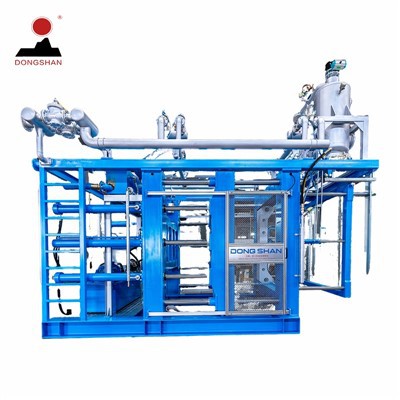
Now, here’s where my side of the conversation comes in: our EPS recycle systems don’t just grind up foam and call it a day. A lot of cheap, low-effort systems out there do exactly that—and their recycled EPS is basically useless, so it gets tossed anyway. The good ones (the ones we build) use a process called densification. Let me explain that in plain terms: when you grind EPS into tiny bits, it’s still fluffy, like packing peanuts. We use heat, pressure, and a food-grade additive (no chemicals, I swear) to squeeze all that air out, turning that 95% air fluff into a solid, dense block that’s only 10-15% of the original volume. That’s a game-changer because it cuts down transport costs by 85%—which means you’re using way less fuel to ship the material. If you’re just grinding and tossing, you’re spending hundreds more on gas, and that kills the whole “green” angle.
But wait—some environmentalists will tell you densification still uses too much energy. Fair point. But here’s the data: recent studies show that making new EPS from virgin plastic uses about 110 MJ per kilogram, while recycled EPS only uses 25 MJ per kilogram. That’s a 77% drop in energy use. And that’s not even counting the energy saved from not sending it to a landfill or incinerator. Let’s do the math on a mid-sized construction company: they toss 10,000 kg of EPS a year. If they send it to a landfill, that’s $300 in tipping fees, and it’s sitting there forever. If they run it through our system, they turn it into 1,000 kg of dense recycled blocks, sell those blocks to manufacturers for $0.50 per kg (we’ve got a network of plastics companies that buy this stuff for new packaging, insulation, even picture frames), and that covers almost the cost of running the system. Plus, they’re not adding 10,000 kg of non-biodegradable plastic to the planet. That’s a win-win that a lot of people miss when they just assume recycling is “good” no matter what, or “bad” if it’s not perfect.
Another big myth: recycled EPS is low-quality, so it’s only good for cheap products. No way. The blocks we produce go to companies that make new EPS packaging—same as virgin, sometimes even better because we can sort out any food residue or paint before processing. I had a customer last year, a big electronics retailer, that was using virgin EPS for all their TV shipments. They switched to 100% recycled EPS from our system, and their return rate for packaging damage dropped by 12% because the densified material is more uniform. They saved $12,000 a year on virgin plastic, and cut their plastic waste by 9 tons. That’s not a small win.
But let’s be real—this isn’t all sunshine. There are still gaps that make EPS recycling tricky. For one, most communities don’t have curbside EPS recycling programs. If you’re a regular person, you can’t just put your coffee cup or packing foam out with your bins—it’s too bulky, and most cities don’t have the infrastructure. That means a lot of good-intentioned people toss EPS in the trash, which is why we sell a lot of our small, compact systems to local businesses, restaurants, and even apartment complexes. They can process their own EPS on-site, no need to haul it across the state to a recycling plant. That cuts down on transport emissions even more.
Another thing: contamination. If you process EPS that’s got food grease, paint, or other plastic mixed in, the recycled block is ruined. So a big part of our job is teaching customers how to sort their EPS properly. It’s not rocket science—just rinse it, pull off any tape or labels, and don’t mix it with other plastics. We do free training sessions for all our clients, because if they mess up, the whole thing is a waste. And honestly? Most people get it. They don’t want to be responsible for more plastic pollution, so they’re willing to put in 5 minutes to sort it right.
Now, let’s address the elephant in the room: is this better than other plastics? EPS is lighter, so it uses less material per unit of product. A single piece of EPS packaging for a laptop uses 0.05 kg of plastic, while a molded plastic insert uses 0.2 kg. So even if 20% of that EPS is recycled, it’s still better than sending that heavier plastic to a landfill. But yeah, it’s not perfect. No recycling system is. The key is that it’s way better than the alternative of letting it sit in a landfill for 500 years.
I’ll also be straight with you: our system isn’t for everyone. If you’re a small café that only tosses 10 kg of EPS a month, the cost probably isn’t worth it—you can drop it off at a local EPS drop-off event once a quarter. But if you’re a construction company, a grocery chain, or a warehouse that generates 500+ kg a month, this is a no-brainer. You’re not just reducing your carbon footprint—you’re saving money, and keeping tons of plastic out of the environment.
Let me give you a real example of a customer that made the switch. Last year, we worked with a mid-sized construction firm in Texas that was sending all their foam insulation and packing foam to the landfill, paying $400 a month in tipping fees. They bought one of our medium-sized densification systems for $12,000. In 10 months, they’d paid that off by selling the dense recycled blocks to a local plastics manufacturer. Now, they’re not only not sending 6 tons of EPS to the landfill every year—they’re making an extra $500 a month on top of that. And their sustainability report got them a bunch of new clients that require eco-friendly practices. That’s the kind of ROI that makes this worth it.
So, circling back to the original question: Is an EPS recycle system environmentally friendly? The answer is a resounding yes—if it’s the right system, used the right way. You can’t just buy a cheap grinder and call it a day. You need a system that densifies the EPS efficiently, uses low energy, and pairs with a network of buyers for the recycled material. And you need to commit to proper sorting, so you’re not producing contaminated plastic that ends up in the landfill anyway.
At the end of the day, the biggest problem with EPS isn’t the plastic itself—it’s how we’ve handled it for the past 70 years. We’ve treated it as a disposable product, not a resource. EPS recycle systems change that. They turn waste into a valuable material, cut down on energy use, reduce transport emissions, and keep microplastics out of our soil and water.
If you’re someone who deals with EPS—whether you’re a business owner, a facilities manager, or someone who just wants to reduce their plastic footprint—let’s talk. I’ve helped dozens of companies figure out if an EPS recycle system makes sense for their operations, no sales pitch, no pressure. I’ll tell you if it’s a good fit, and if it’s not, I’ll point you to the nearest drop-off location. The point is, we can’t keep letting all this foam go to waste. It’s time to stop seeing EPS as trash and start seeing it as the resource it always was.
Don’t hesitate to reach out if you’re ready to learn more.
EPP Molding Machine References:
- Plastic News. (2022). "EPS Recycling: Closing the Loop on Expanded Polystyrene."
- Environmental Protection Agency (EPA). (2021). "Energy Use in Plastics Manufacturing: Virgin vs. Recycled Materials."
- Journal of Cleaner Production. (2023). "Densification of Expanded Polystyrene: Emissions and Economic Analysis."
- National EPS Recycling Association (NERA). (2022). "Curbside EPS Recycling Access and Barriers in the U.S."
Hangzhou Fuyang Dongshan Plastic Machinery Co., Ltd.
Hangzhou Fuyang Dongshan Plastic Machinery Co., Ltd. is one of the most professional EPS recycle system manufacturers and suppliers in China, featured by quality products and low price. Please feel free to wholesale advanced EPS recycle system made in China here and get quotation from our factory. Customized orders are welcome.
Address: 101 Guanting, Baiqian Villige, Luzhu Town, Fuyang District, Hangzhou City, Zhejiang Province, China
E-mail: xu@dong-shan.cn
WebSite: https://www.epseppmachinery.com/
