Hey everyone, it’s Sam from your go-to formwork accessory supplier, and today we’re diving into a question I get all the time from precast concrete producers: Are there any formwork accessories for pre-cast concrete elements? Short answer? HELL YES—you’d be shocked how much the right small parts take your precast game from “meh” to “chef’s kiss.” I’ve been in this biz for 12 years, watching new guys skip these and end up with lousy finishes, cracked elements, or missed deadlines, so let’s break down what actually matters here, no boring jargon overload. Formwork Accessory
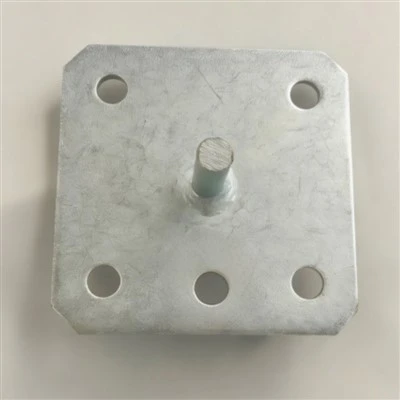
First off, let’s get one thing straight: precast concrete is way different from on-site poured concrete. You’re working with fixed forms that repeat dozens, hundreds, even thousands of times on the same project, so consistency is king. The accessories aren’t just “extras”—they’re what make your precast elements dimensional, durable, and easy to lift once they’re cured. Let’s start with the ones I sell most that I swear by.
First up, the workhorses: form ties and spacers. Wait, I know, spacers sound basic—but not all spacers are made equal for precast. On-site, you might use cheap plastic chippies, but precast needs precision spacers. Like, concrete elements need a consistent cover of concrete around rebar to stop rust, right? If your spacers are flimsy, you’ll get a spot where rebar’s touching the form (that’s a visible rust streak every customer hates) or too much concrete cover, which weakens the element. I supply polymer spacers that are UV-stabilized for when you’re leaving forms out in the sun between pours—no warping, no shifting mid-pour. And form ties? Precast can be for wall panels, beams, even bridge girders—you need ties that hold the form walls tight so they don’t bulge when you pump concrete in at 6 feet per minute. The snap ties I carry are designed so you snip the end flush with the form once it’s cured, no grinding needed. Save your crew 20 minutes per element, easy.
Then there’s lifting hardware—this is non-negotiable, guys. Once your precast beam or wall is cured, you’ve got to move it to the yard or load it onto a truck. You can’t just hook the rebar; that’ll snap or pull loose. So we make lifting anchors that are embedded right into the concrete during the pour. There’s the lift loop anchor for heavy precast walls—they’re load-tested up to 5 tons each, so you can lift a full 10-foot panel without stress. And the blind anchor for smoother finishes? No loops sticking out if you want a flat surface; you drill a hole later if you need to attach something, or plug it. I’ve had a few clients tell me they tried cheap anchors from a random supplier, and half of them pulled out during lifting—total disaster, ruined a $2,000 wall panel. Don’t cut corners here.
Wait, what about form liners and surface modifiers? A lot of precast producers do architectural elements now, like decorative wall panels with brick patterns or stone textures. Form liners are silicone or plastic inserts that line the inside of your form, so when concrete cures, it copies that texture. The liners I supply are reusable up to 50 times, which is way better than the cheap ones that tear after 2 uses. And if you want a specific finish—like exposed aggregate or a smooth, non-slip floor panel—we have release agents too, but not the smelly petroleum kind. The water-based release I carry doesn’t stain the concrete, so you don’t get those weird brown streaks on finished elements. Pro tip: mix a tiny bit of our surface hardener with the concrete mix for precast floor panels, and you’ll get a surface that resists scratches and scuffs way better than standard concrete. That’s a selling point for your customers, by the way—they’ll pay more for durable stuff.
Oh, and don’t forget the small stuff that keeps production moving: form sealers and edge protectors. When you pour precast, concrete will seep into every tiny gap in the form, which leaves a rough “fin seam” you have to grind off later. Our foam form sealers stick to the form edges, block that seepage, and save your crew hours of finishing work. And edge protectors—for precast elements that get moved around the yard, corners chip super easy. The plastic edge caps I supply snap right onto the edges of beams or panels, so when you’re stacking 10 elements high, no chips, no repairs. I had a guy last month who was chipping 15 corners per day before he started using these; now he’s down to 0, and he saved $300 in materials last week alone. That’s real money, not just “nice to have.”
Wait, let’s talk about less obvious accessories too—shims and form clamps. When you’re assembling precast forms, especially for custom elements that aren’t straight, you need shims to adjust the gap between form panels. Our stainless steel shims don’t rust, so you can leave them in the form if you want (wait, no, actually, most you pull out, but stainless won’t leave rust stains if you forget). And quick-release form clamps—way faster than bolting forms together by hand. The spring-loaded clamps I sell snap into place in 2 seconds, so your crew can set up 3 forms in the time they used to take to do 1. That’s a huge productivity win for small precast shops that can’t afford extra labor.
I know what some of you are thinking: “Isn’t all this stuff generic? Why should I buy from you?” Because a lot of suppliers sell form accessories that work for on-site, not precast. Precast has specific needs—repeatability, fast turnarounds, easy stripping, no surface damage. The spacers I make sure are compatible with all common precast mix designs, so they don’t absorb water and warp during curing. The lifting anchors are designed to leave a small, clean cavity that you can plug with a concrete patch, so no ugly holes. And I test every new product I bring in myself—last quarter, I tried a new line of form liners, and they tore after 20 uses instead of 50, so I dumped them. I don’t sell junk, because if my customers mess up their precast jobs, they don’t come back.
Let me throw in a real example from a customer I had last year. They were a small precast company doing residential wall panels for a housing development. Before they switched to my spacers and form ties, they were getting 8-10 rebar exposure defects per 100 panels, and they were spending 2 hours per panel grinding form seams. After switching? They dropped defects to 1, and cut finishing time by 40%. That’s them making an extra $1,200 per day on the same workload, just from using the right accessories. It’s not hype—it’s math.
Now, let’s address a common mistake: some precast producers think they can skip accessories by improvising. Like, using rebar as spacers? No, that causes rust streaks. Using scrap wood as form sealers? That leaves rough edges and splinters that get in the concrete. I’ve seen guys try to lift panels with regular wire cable, and it cuts into the concrete. All that improvisation costs you more in the long run—ruined panels, extra labor, unhappy clients. The right form accessories aren’t an expense; they’re an investment.
So if you’re a precast producer out there, whether you’re doing small decorative panels or heavy bridge girders, you need these accessories. And if you’re tired of buying stuff that doesn’t work for your specific process, hit me up to chat. We can send you samples of the spacers, anchors, liners—whatever you need to test on your next job. No hard sell, just real advice from someone who’s been in this space for decades. I’d rather you buy one pack and see the difference than lock you into a big order.
Wait, one last thing: if you’re just starting out with precast, don’t overbuy. Start with the basics: spacers, form ties, and lifting anchors. Then add form sealers and edge protectors once you see how much time and money they save. No need to blow your budget on every accessory at once.
At the end of the day, precast concrete is all about consistency and quality, and the small formwork accessories are what tie that whole process together. You can have the best concrete mix in the world, but if your forms are leaking, your spacers are shifting, or your lifting hardware is junk, your precast elements will suffer. Stop settling for generic stuff that’s not built for precast, and reach out to talk through what you need for your jobs.

And for the record, if you’re not a precast producer but just curious, that’s cool too—drop a comment, I’ll answer any specific questions you have about how these parts work. But for those in the thick of precast production, don’t sleep on these accessories—they’ll make your life way easier.
Scaffoldings References:
- Construction Formwork Accessories Handbook, Formwork Engineers Association, 2022
- Precast Concrete Production Best Practices, National Precast Concrete Association, 2021
- Lifting Anchor Load Testing Standards, American Society of Civil Engineers, 2020
Rizhao Wellfit Scafform Co., Ltd.
As one of the most professional formwork accessory manufacturers and suppliers in China, we have world-leading production equipment and strong manufacturing capabilities. Please feel free to buy high quality formwork accessory at competitive price from our factory.
Address: No. 7, Huasheng Road, Taoluo Town Industrial Zoon, Donggang District, Rizhao City
E-mail: sales@wfscafform.com
WebSite: https://www.wfscafform.com/
