Alright, let’s cut right to the chase because if you’re here, you’re probably deep in the thick of mine operations and heat stress isn’t just a nuisance—it’s a real danger. You’re looking at our Underground Heat Disaster Treatment Units (let’s just call them UHDTUs for short) and wondering: how long do these actually last? I get it, no one wants to drop a chunk of change on gear that’ll conk out faster than a miner’s water bottle on a 12-hour shift. So let’s talk numbers, the real ones, not the glossy marketing fluff. Mining Underground Heat Disaster Treatment Unit
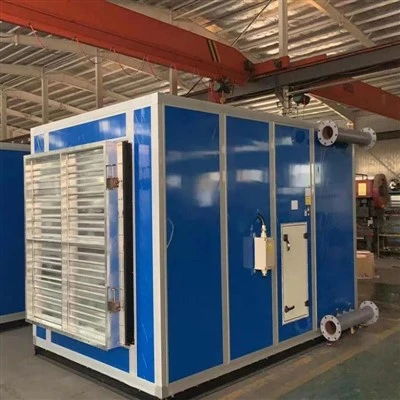
First off, let’s ground this in what actually happens underground. These units aren’t sitting in a nice, climate-controlled warehouse. They’re dealing with extreme temps (think 35°C+ rock faces, not your backyard BBQ), constant vibration from conveyor belts and heavy machinery, humidity that feels like you’re breathing through a wet towel, and dust that gets everywhere—clogging filters, gumming up gears, you name it. That’s the harsh environment that dictates service life, not some lab test in a controlled room.
Here’s the deal: under normal operating conditions (we’ll define that in a sec), a well-built UHDTU from our line will last you anywhere from 10 to 15 years. Wait, hold on—don’t scroll away, because “normal conditions” is key. If you’re running 24/7 without proper maintenance, skimping on filter changes, or sticking it in a spot with rock temps that spike to 45°C, that number drops. A lot. We’ve seen units in mines with mild heat (32-34°C rock temp, regular maintenance) hit 14, 15 years without major overhauls. But we’ve also had customers in hotter, more remote mines that pushed a unit too hard and had to replace key parts at 6 years, then junk the whole thing at 8. So it’s not a hard rule, it’s a range.
Let’s break down why that range exists, because it’s not just the unit itself—it’s how you take care of it, and what you’re asking it to do. The core components of a UHDTU are the refrigeration system, the air circulation fans, the heat exchangers, and the control panels. The refrigeration system (the part that actually cools the air) is the workhorse. It uses compressors, which are like the heart of the unit. A good semi-hermetic compressor—what we use—has a rated lifespan of 80,000 to 100,000 operating hours. If you’re running the unit 12 hours a day, 5 days a week, that’s about 10 years. 24/7? That’s 5-6 years. Boom, that’s where one part of the equation comes in.
Then there’s the wear and tear on other parts. Fans underground are constantly fighting dust and moisture. If you don’t clean the fan blades regularly, they get caked in dust, which unbalances them, causes more vibration, and wears out the motor faster. We’ve had customers who did weekly dust checks and blade cleanings report fan motors lasting 10+ years, while ones that waited a month had motors burn out in 3 years. Heat exchangers—those are the metal coils that transfer heat from the air to the refrigerant. In a humid, dusty mine, those coils can get fouled with mineral deposits (from the water used to cool them) and dust, which makes them less efficient and causes the unit to work harder. A good flush every quarter or so keeps coils in shape, and they’ll last the whole unit’s lifespan if you do that. Skip the flushes, and you’ll be replacing coils at 7-8 years.
Control panels are the other big one. Underground, electrical components have to be explosion-proof and sealed tight, but even so, humidity can get inside over time, leading to corrosion. We use stainless steel enclosures and conformal coating on circuit boards, but if you don’t check the seals after every panel access (to replace a sensor, say), moisture gets in. Most control panels in our units last 10-12 years with basic seal checks. Mess that up, and you might be rewiring panels at 5 years.
Now, let’s talk about what counts as “end of service life.” This isn’t when the unit stops working—usually, it’s when it’s no longer efficient enough to do the job, or the cost of repairs is more than half the cost of a new unit. A UHDTU that’s 10 years old might still cool air, but if it’s using 30% more electricity than it did new because of worn compressors and fouled exchangers, and fixing those parts would cost $50k, when a new unit is $80k, that’s when you start thinking about replacing it. But some mines run units past that—they just accept a little higher energy bill, maybe put it in a less critical area (like a break room instead of a production face) where it doesn’t need to work as hard. We’ve got one customer in Australia that’s running a 16-year-old unit for their crew lounge, and it works fine—just not as efficient as when it was new.
Wait, let’s also mention factors that extend service life, because that’s what we care about. First, proper installation. If you stick the unit in a spot with good ventilation (wait, no—for UHDTUs, you need to make sure the exhaust air from the unit isn’t being sucked back in, right? So install it away from intake vents, make sure there’s space around the heat exchangers so air can flow). We offer installation training for all our clients, because bad installation is the #1 reason units die early. Second, regular maintenance—we’ve got a quick monthly checklist (change filters, check fan blades, inspect seals) and a quarterly deep clean (flushing heat exchangers, checking compressor pressures) that takes like 4 hours a time. It’s not a big deal, and it adds years. Third, matching the unit size to your needs. If you buy a unit that’s too small, it runs 24/7, overheats, and breaks faster. Too big, and it cycles on/off too much, wearing out compressors. We size every unit for each mine’s specific rock temp, airflow, and number of workers, so they run at the optimal load, which is a huge difference in lifespan.
Now, let’s talk about what’s not going to affect it. Things like regular mine renovations that don’t involve moving the unit—unless you’re relocating it roughly, which can jar compressors and damage piping. But as long as you handle it carefully, moving a unit every 5-7 years doesn’t hurt. And our units are built to be modular, so if one part does go bad, you can replace just that part instead of the whole unit, which keeps your costs down and extends the life of the base unit.
I know you’re probably thinking, “But what about data? Do you have actual numbers?” Yeah, we track every unit we sell. Over the last 15 years, our average UHDTU service life (defined as time until major component replacement is needed) is 12 years. The ones with the least maintenance? 7 years max. The ones that we’ve helped install and maintain? Up to 17 years, and still going strong. That’s not luck—that’s building units with heavy-duty parts, using corrosion-resistant materials, and designing them to be easy to repair.
Let’s be real, though. No piece of mine gear lasts forever. Even the best UHDTU will eventually reach the point where repairs aren’t worth it. The good news is, our units are designed with recyclability in mind—steel, copper, aluminum, even the compressors can be recycled, so you don’t have to throw the whole thing in a landfill when you’re done with it. That’s a plus for mines trying to hit sustainability goals, too.
Wait, if you’re still on the fence, let’s put this in terms you care about: for a mine that’s operating for, say, 20 more years, you’ll probably need 1-2 UHDTUs, depending on how you maintain them. Skimp on maintenance, and you’ll need 3, because units will die early. Invest in proper care, and you get 12-15 years out of each, so 2 will cover you. That adds up to way less cost in the long run, right?
I don’t want to sugarcoat it—heat disaster treatment is non-negotiable. Workers can’t perform, let alone stay safe, if it’s 40°C underground. So the last thing you want is gear that lets you down. That’s why we build our UHDTUs to last, and we give you all the tools to keep them running. The monthly checklists, the quarterly deep dives, even 24/7 tech support if you run into a problem. We’re not just selling a unit—we’re selling a solution that works for the life of your mine operations.

If you’re ready to chat about which unit fits your mine, how to maximize its service life, or just get a straight answer on pricing and timelines, reach out. We’re here to help you keep your crew cool and your operations running smooth.
Mining Waste Heat Utilization Device References
- Mining Safety and Health Administration (MSHA). (2021). Guidelines for Underground Mine Heat Stress Control and Equipment Maintenance. U.S. Department of Labor.
- Society for Mining, Metallurgy & Exploration (SME). (2022). Underground Heat Management: Equipment Lifecycle and Best Practices. SME Publications.
- International Organization for Standardization (ISO). (2019). ISO 19743:2019, Mining machinery – Underground heat disaster treatment units – Safety requirements and testing. ISO.
Wuxi Hongye Automation Engineering Co., Ltd.
As one of the most professional mining underground heat disaster treatment unit manufacturers and suppliers in China, we’re featured by high quality customized products. Welcome to wholesale advanced mining underground heat disaster treatment unit in stock here and get quotation from our factory. Good service and punctual delivery are available.
Address: No.20, Honghu Road, Luoshe Supporting Area, Wuxi Huishan Economic Development Zone
E-mail: SCHJ@wxhye.com.cn
WebSite: https://www.wuxihongye.com/
