When I first started out as a car interior components supplier almost a decade ago, I didn’t realize how often my customers would ask one specific question: “What’s the real difference between OEM parts and aftermarket parts for my car’s interior?” At first, I’d give a quick, surface-level answer, but over the years, I’ve seen that the question goes way deeper than just “original vs. copy.” It’s about trust, fit, safety, and the small, daily details that make a car feel like home—whether it’s a soft door panel, a functional cup holder, or a seat that stays comfortable on a three-hour drive. Car Interior Components

Back then, I’d worked in a small factory that made parts for a major Detroit automaker, so I knew firsthand what OEM (Original Equipment Manufacturer) parts are. I’d stand on the line at 6 a.m., watching technicians pull fabric rolls that were dyed to exact color codes, measure every stitch with calipers, and test door handles until they broke (well, until they reached the 10,000-cycle mark required by the automaker). But when I started my own business focused on aftermarket interior components, I saw a lot of confusion. Many car owners, even regular mechanics, assume aftermarket parts are just cheap knockoffs made to look like OEM parts. That’s not always true—and for customers, that distinction can make or break a repair or upgrade.
Let’s start with the basics: what is an OEM car interior component? Simply put, OEM parts are made by the exact supplier the original automaker contracted to build parts for their specific model year and trim. For example, if you drive a 2021 Honda CR-V, the dashboard trim that comes with the car when it was built is made by a supplier that Honda has worked with for decades—they’re the OEM for that part. What that means for the customer is consistency. Every OEM part is built to strict, non-negotiable specs set by the automaker. The color of the leather on your seats? It’s not just a “similar brown” to what the factory used—it’s a exact Pantone code, matched to every other interior part in the car so your door panels, center console, and seats don’t clash. The plastic used for the gear shift knob? It’s formulated to flex just enough in cold weather so it doesn’t crack when you turn it on a frosty morning, and it doesn’t fade from UV light after five years.
But here’s the thing about OEM parts: they’re not always the best choice for everyone. When a car is still under warranty, many mechanics and owners stick with OEM parts because they fear voiding the warranty if something goes wrong. That makes sense. But once a car is out of warranty, or if you’re looking to customize your interior, OEM parts can be pricey. Last year, a customer came to me saying he needed to replace the broken sun visor on his 2018 Subaru Outback. The OEM part from the dealership cost over $180—just for the visor, not including installation. When he looked into aftermarket options, he found a part that worked for $45. But he hesitated, worried it wouldn’t fit right or look cheap.
That’s where the aftermarket comes in. Aftermarket car interior components are made by companies that aren’t the original equipment supplier, but they’re designed to work with specific makes and models. For a long time, aftermarket parts had a bad reputation. I remember buying a set of floor mats for my first car, a 2008 Toyota Corolla, from a big-box auto parts store. They were too short, the edges curled up, and the rubber smelled so bad I had to leave my car windows down for a week. That’s the kind of experience that gives aftermarket parts a bad name. But today, the aftermarket is a huge, evolving industry, and not all parts are created equal.
As a supplier, I can tell you that the best aftermarket interior parts don’t cut corners. We source our materials from the same chemical suppliers that many OEM factories use—we just don’t have to meet the automaker’s exact branding or assembly line timing requirements. That means we can focus on what matters most to the end user: fit, function, and value. For example, our custom seat covers are made with the same grade of neoprene that some OEMs use, but we offer 12 different color options (something most OEMs only offer 2-3 for mid-trim models), and they cost half as much as OEM seat replacement panels. The difference is, the automaker has to make sure their parts work for every car that rolls off the line, in every market, and for every driver. We can tailor our parts to specific regional needs—like making our floor mats for SUVs in the mountain West with extra grip to hold snow and mud, a feature most OEM floor mats don’t prioritize.
But there are real differences beyond cost and variety, and they come down to control. When an automaker designs a new car, every interior part is engineered to work with the entire vehicle. The weight of the door panel is calculated to meet the car’s overall fuel efficiency goals. The sound-dampening foam under the headliner is matched to the car’s door seals to reduce road noise. That level of integration is something even the best aftermarket parts can’t replicate perfectly. Last month, a mechanic brought me a set of aftermarket door speakers he’d installed for a customer’s Ford F-150. The speaker trim was 1/8 of an inch too thick, so it wouldn’t fit flush against the door panel, creating a gap that let in wind noise. The OEM speaker trim fit perfectly because it was designed specifically for that door’s exact interior dimensions.
Another key difference is availability. If your car is a popular model like a Honda Civic or Toyota Camry, OEM parts are easy to get, but if you drive a older, less common car—say, a 2006 Saturn Ion or a 2012 Mini Cooper Countryman—OEM parts can be hard to find, and when you do find them, they’re often overpriced because of low demand. That’s where aftermarket parts shine. A lot of aftermarket companies specialize in classic or niche models, making parts that aren’t in production anymore, or updating old parts with better materials. Last year, a customer sent us a photo of his 1998 Volkswagen Beetle’s broken dashboard. The OEM dashboard from the dealer would have cost $600 and taken two weeks to order. We made him an aftermarket dash panel that matched the original color, used a more scratch-resistant vinyl, and cost $220, which he was able to pick up in two days.
But fit isn’t the only concern. There’s also safety, which is something I take extremely seriously as a supplier. Many people don’t realize that interior parts play a big role in crash safety. For example, the foam in a car’s headliner is designed to absorb impact in a rollover, and the plastic around the steering wheel is engineered to crumple on impact to reduce driver injury. OEM parts are tested to meet federal safety standards, but aftermarket parts aren’t always held to the same rules. That’s why it’s important to work with aftermarket suppliers that have third-party testing for their parts. We send every batch of our door panel frames to an independent lab to test for impact resistance, and our seatbelt pads are tested to meet the same friction standards as OEM parts, so they don’t dig into your skin during a stop.
Warranties are another big difference. Most OEM parts come with a warranty from the automaker, usually 12 months or 12,000 miles. Aftermarket part warranties vary a lot—some companies only offer a 30-day warranty, while we offer a 2-year warranty on all our interior components, because we stand behind our work. We’ve had customers come to us a year after installing our floor mats saying the stitching came loose, and we’ve replaced them for free no questions asked. That’s the kind of trust that builds long-term business.
I also think it’s important to talk about customization, because that’s a space where aftermarket parts definitely outperform OEM. When you buy a new car, the interior is limited by what the automaker offers. If you want red seats but your trim only comes with black, you either have to pay thousands to reupholster the entire interior or live with black. Aftermarket parts let you customize your car to match your style. Last month, a customer ordered a set of carbon fiber center console trim pieces for his BMW M3. The OEM carbon fiber trim from the dealer would have cost $1,200, but we made a matching set for $450, using the same grade of carbon fiber. We also offer custom embroidery for seat headrests, weather-resistant seat covers for people who work outdoors, and even LED accent light kits that fit directly into the dashboard without any wiring changes—something most OEMs don’t offer as standard.
That said, OEM parts still have a place. If you’re trying to keep a car factory-original, especially a classic car you plan to show, OEM parts are the only way to go. I worked with a customer last year who was restoring a 1967 Ford Mustang, a show car he planned to enter in national classic car events. He needed a set of original floor mats that matched the exact pattern and rubber compound used in 1967. We couldn’t make that—aftermarket parts for classic cars usually have updated materials—but we connected him to a specialty OEM supplier that made exact reproductions for show cars. That’s a case where aftermarket just can’t compete.
So, when should you choose OEM, and when should you go aftermarket? For me, the rule of thumb is: if you need an exact replacement for a part that’s already broken, you want to keep your car under warranty, or you’re restoring a classic to factory specs, OEM is a safe bet. It’s built to fit perfectly, it’s backed by the automaker’s warranty, and it will look identical to the original. But if you’re looking to save money, customize your interior, or replace a part for a car that’s out of warranty or hard to find OEM parts for, aftermarket is often the better choice—just make sure you choose a supplier that prioritizes quality, fit, and safety, not just low prices.
Over the years, I’ve learned that the best way to help customers is to be transparent. I don’t push OEM parts if aftermarket is a better fit for their needs, and I don’t sell aftermarket parts that are cheap knockoffs. As a car interior components supplier, my job isn’t to choose for you—it’s to give you all the facts so you can make the best decision for your car and your budget.
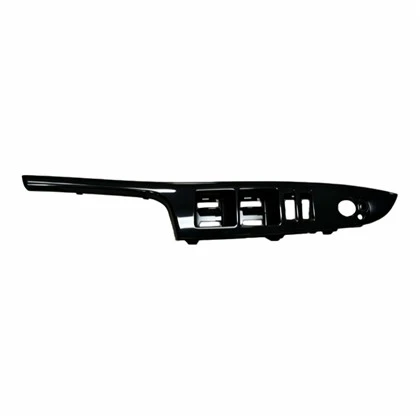
If you’re not sure which part is right for your vehicle, or you’re looking for a custom interior component, feel free to reach out to us to discuss your needs. We’re here to help you find a solution that works for your car, whether you stick with OEM or explore what aftermarket has to offer.
Car Door Trim Exterior References
- National Highway Traffic Safety Administration. (2022). Federal Motor Vehicle Safety Standard No. 201: Interior Head Impact Protection.
- Automotive Aftermarket Suppliers Association. (2023). Global Automotive Aftermarket Parts Industry Report.
- Society of Automotive Engineers. (2021). Specification for Fit and Function of Automotive Interior Trim Components.
- J.D. Power. (2022). Vehicle Dependability Study: Interior Component Reliability by OEM and Aftermarket Parts.
Hebei Xiujie Auto Parts Co., Ltd.
As one of the most professional car interior components manufacturers and suppliers in China, we have world-leading production equipment and strong manufacturing capabilities. Please feel free to wholesale bulk customized car interior components from our factory. Contact us for quotation and free sample.
Address: Industrial New Area, Wen’an County, Langfang City, Hebei Province (State-run Xiaowu Farm)
E-mail: runtaoli87@gmail.com
WebSite: https://www.xiujie-cn.com/
