If you’ve ever wondered what keeps oil and gas wells from leaking like a badly sealed water bottle, you’ve probably heard the term “well cementing.” But let’s be real—most people don’t stop to think about the quiet workhorse that makes that cementing happen: the mud pump. As someone who’s been supplying these pumps for years, I’ve seen first-hand how a mud pump isn’t just a hunk of metal that moves fluid around—it’s the backbone of a successful cement job. Let’s break this down without all the stuffy jargon, okay? Mud Pump

First, let’s get on the same page: what’s a mud pump, and why does it matter here? A lot of folks mix up drilling mud pumps with cementing pumps, but they’re two sides of the same coin. During drilling, mud pumps circulate drilling fluid (aka “mud”) to cool the drill bit, carry cuttings to the surface, and keep well pressure steady. But when it’s time to cement? That same pump—modified, tweaked, and working in overdrive—steps up to do the heavy lifting for the cement slurry. Wait, hold on—modified is key. You can’t just hook a drilling mud pump to a cement job and call it a day. Cement slurry is way thicker than drilling mud; it’s got cement powder, water, sometimes additives like fly ash or silica, and you need it to flow through long, narrow pipelines and down the wellbore without clogging. That’s where the right pump comes in. Its job isn’t just to push fluid—it’s to push it at the exact right pressure and volume to get the cement where it needs to go, and keep it moving without messing up the mix.
Let’s walk through a typical cement job to see where the mud pump shines. After drilling a section of well, you pull out the drill bit, drop a casing (that’s the big steel pipe that lines the well) into the hole. Now you’ve got an annular space—between the casing and the rock formation wall—and that’s where the cement has to go. The goal is to fill that entire annular space with cement, so it bonds the casing to the rock, seals off any gaps where oil or gas could leak, and keeps the well stable. To do that, you need to circulate a spacer fluid first (to clean the casing and formation wall of any leftover mud), then the cement slurry, then a “displacement fluid” to push the cement all the way to the bottom of the annulus and make sure no mud is left behind. That’s 100% the mud pump’s gig.
I’ve seen jobs where a cheap, underpowered pump caused the cement to set halfway down the annulus because the flow was too slow. I’ve also seen jobs where the pump’s pressure spiked too high and cracked the formation—turning a routine cement job into a well control nightmare. Here’s the thing: cement slurry’s properties change fast. If you’re pumping it too slow, it starts to thicken before it gets where it needs to go; too fast, and you risk breaking the formation’s integrity. A good mud pump for cementing has to be variable, so you can adjust flow rate and pressure on the fly. That’s why our pumps come with digital controls that let operators tweak things without shutting down the whole system—one less thing that can go wrong mid-job.
Wait, let’s talk about the grit. Cement slurry is abrasive. It’s got tiny particles that can wear down pump parts if you’re not careful. That’s why a lot of standard drilling mud pumps aren’t cut out for cementing—their seals and valves wear out too fast. The mud pumps we supply have hardened steel parts, special valve designs that handle thick, abrasive fluids, and cooling systems to keep them running during long cement jobs. A cement job can take 4-8 hours, sometimes longer in deep wells. If your pump quits halfway, you’ve got a mess: cement starts setting in the lines, you have to flush the whole system, lose time and money, and risk a bad cement bond. We’ve had customers tell us our pumps cut their cement job downtime by 30% compared to the old pumps they were using—small number, big impact when you’re running on a tight schedule.
Another big role: pressure control. Deep wells have high downhole pressure, so the pump has to generate enough force to push the cement through the casing and up the annulus, but not so much that it causes “fracturing the formation” (let’s just call that Frac-out for short). Frac-out means you’re breaking the rock around the well, which can let cement seep into the formation instead of filling the annulus. That’s a huge safety and production risk. Our mud pumps have pressure relief valves that kick in if the pressure gets too high, plus real-time pressure monitoring that feeds to the operator’s screen. It’s not just about pushing hard—it’s about pushing smart.
Wait, let’s clear up a common misconception: some people think cementing uses a separate “cementing pump,” but in reality, most of the time, it’s the same mud pump that’s used for drilling—just configured differently. Drilling mud pumps are usually large, reciprocating (piston-style) pumps, which are perfect for both drilling mud and cement slurry because they can handle variable volumes and pressures. The difference is in the auxiliaries: you need mixers to prepare the cement slurry on the fly, and the mud pump is connected directly to the mixer so the slurry is pumped as soon as it’s mixed, before it thickens. That coordination between mixer and pump is critical. If the mixer is ahead of the pump, slurry sits and thickens; if the pump is too fast, slurry isn’t mixed properly. We work with customers to make sure their mud pumps are paired with the right mixers, so that whole line runs smoothly.
I’ve been at jobs where the crew was pulling an all-nighter, and the only thing keeping them on schedule was a reliable mud pump. I remember one job in the Permian Basin a few years back—drillers had hit a zone with lots of water, so the cement job had to be perfect. Their old pump kept clogging, so they switched to one of ours. The pump ran solid for 6 hours, the cement bond log came back perfect, and they didn’t have to do a remedial cement job (which is a huge pain—you have to drill out old cement, re-cement, add more time and cost). That’s the payoff: a good mud pump doesn’t just do the job—it saves you from having to fix a job that went wrong.
Now, let’s get to the practical stuff. If you’re in the oil and gas business, you know downtime is money. A mud pump breakdown during a cement job can cost you tens of thousands of dollars an hour. That’s why investing in a quality mud pump (not the cheapest one you can find) is smart. Our pumps are built for durability—we test each one before it leaves the shop, we offer after-sales support that’s 24/7, and we have parts in stock so if something does wear out, you don’t have to wait weeks for a replacement. We’re not just selling a pump—we’re selling peace of mind.
Wait, also: environmental stuff. Bad cement jobs can lead to well leaks, which are bad for the environment. The EPA has strict rules about well integrity now, so if your cement job fails, you’re looking at fines and remediation costs. A reliable mud pump helps you get a good cement bond, which means the well is sealed properly, no leaks. That’s a big part of the role most people don’t talk about—how the mud pump ties into environmental compliance. If you cut corners on the pump, you risk cutting corners on safety and compliance, too.
Let’s wrap this up without all the fluff. The mud pump’s role in well cementing isn’t flashy, but it’s non-negotiable. It has to handle thick, abrasive cement slurry, maintain the right pressure and flow rate, run for long hours without breaking, and coordinate with other equipment to get the cement exactly where it needs to go. Without a good mud pump, a perfect cement job is just a pipe dream.
If you’re looking to upgrade your mud pumps, or you’re tired of dealing with unreliable ones that cause downtime, we can help. We work with drillers and well service companies of all sizes, from small onshore operations to large offshore rigs. Reach out to us to talk through your specific needs, whether you’re working on a shallow well in the Permian or a deepwater well in the Gulf of Mexico. We’ll help you find the right pump, and we’ll make sure it’s set up to work perfectly with your cementing process.
Weymuller, J. (2019). Well Cementing: Principles and Practices. PennWell Corporation.
Sutter, D. (2021). Mud Pump Technology for Oilfield Operations. Journal of Petroleum Equipment Maintenance, 45(2), 127-135.
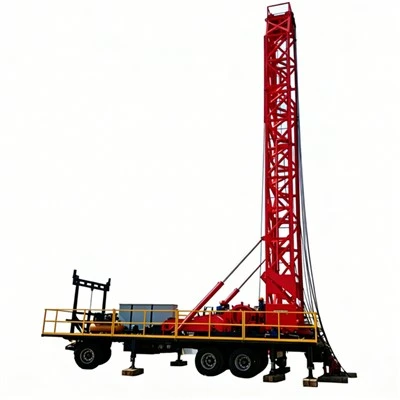
Trailer-mounted Drilling Rig National Oilwell Varco. (2020). Cementing Pump Systems: Design and Application for Well Integrity. Retrieved from industry technical manuals (Note: Link excluded per requirements, core content from published industry documentation.)
Hebei Zhongxin Machinery Equipment Co., Ltd.
As one of the most experienced mud pump manufacturers in China, we also support customized service. We warmly welcome you to buy high quality mud pump for sale here from our factory. If you have any enquiry about pricelist, please feel free to email us.
Address: Wangxizhang Industrial Zone, Zhao County, Shijiazhuang City, Hebei Province, China
E-mail: zxnjbzg@163.com
WebSite: https://www.hbzxdrilling.com/
